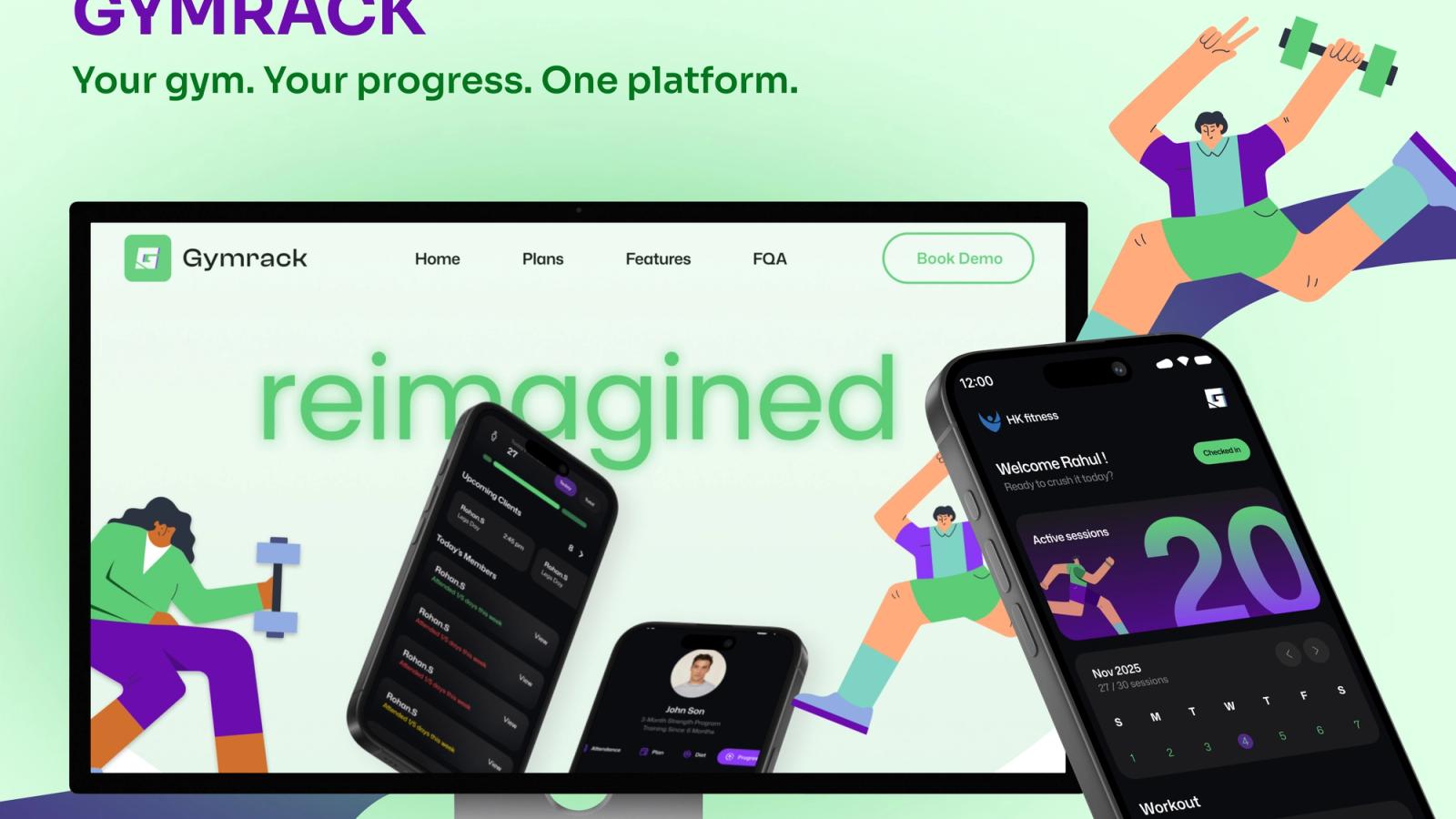
Most gym management software is a billing platform with attendance and progress tracking added on. Gymrack, Stacknyu's own gym platform, started from the opposite direction: operations and member experience first, billing as one module among several. Here's what that choice actually involves once you have to ship it.
Start with the Gym's Operating Rhythm, Not the Invoice
Gym management software has to serve more than a member directory and a payment schedule. The useful product boundary includes check-ins, active sessions, trainer assignments, and the moments where members actually look at their own progress. Billing matters, but it's one module — not the frame everything else has to fit inside.
Two Apps, Not One App With Two Modes
It's tempting to build one app and gate features by role. Gymrack ships as two separate native apps instead — an Admin app for owners and staff, a Member app for the gym-going public — because the two audiences open the app for completely different reasons and at completely different frequencies. An owner checks occupancy and revenue daily. A member opens the app to see their next class or log a set. Bundling both into one experience means one of the two always feels like an afterthought.
Separate Staff Visibility From Member Action
Staff need quick operational context — who's checked in, which trainer has which clients, what leads are still open. Members need a small number of focused actions — book a session, log a workout, check a renewal date. Designing these as genuinely separate, role-aware experiences keeps both sides clear without either duplicating the other or diluting itself to serve both.
Letting the Member App Work Without a Gym
The decision that shaped the member app most was making it useful to someone who isn't part of a Gymrack gym at all. If you train independently, the same app works as a plain workout and progress tracker — no gym code, no admin relationship required. That single design choice means the app's value doesn't collapse to zero for a user whose gym hasn't adopted the platform yet, which matters enormously for a product still growing its gym-side base.
Make Progress Part of the Workflow, Not a Separate Tab
Progress tracking is most useful when it connects to attendance and to the next action, not when it sits in an isolated analytics tab nobody opens. A product becomes easier to actually run — and easier for a member to stay engaged with — when those relationships are visible in the same journey a user is already in.
Shipping Fast Because You're Answering to Real Reviews
Building your own product changes the feedback loop. There's no account manager between the team and the complaint — a user flags a missing feature in a public app-store review, and the fix either ships or it doesn't, visibly. Gymrack's Admin app has gone through more than nine tracked releases since launch, including a backend reliability upgrade and an in-app feedback tool built specifically so bug reports and feature requests don't have to go through a review at all. That pressure is uncomfortable and it's also the fastest way to find out which parts of a product design were actually right.
A Practical Build Sequence
Map roles and records first: what does an owner need to see, what does a member need to do, what has to work even without a gym relationship at all. Then build the core check-in, plan and billing workflows for the operations side. Layer in progress views and notifications after the operational core is solid, and add the integrations — payment gateways, lead-capture channels — the business actually needs rather than the ones that sound complete on a feature list.
Case in Point
This is exactly what we built with Gymrack — our own gym management platform, not a client project. More than 200 gyms use it today, across two native apps shipped and maintained since launch.
Read the full Gymrack case study.
Frequently Asked Questions
Should gym software be billing-first or operations-first?
It depends on where your actual daily friction is. If chasing failed payments is the constant fire, a billing-first platform is the right tool. If the bigger problem is knowing who's in the building, keeping trainer workloads visible, or giving members something they'll open daily, an operations-first design — with billing as one module, not the frame — fits better.
Why build two separate apps instead of one app with role-based views?
Owners and members open the app for different reasons at different frequencies, and a single shared interface tends to compromise both. Two focused native apps let each side's design serve exactly what that user needs, without either audience feeling like the secondary use case.
Can a gym member app work for someone who isn't part of a gym?
It can, if that's designed in from the start. Gymrack's member app works as a standalone workout and progress tracker with no gym account required, in addition to serving members of gyms that use the platform — the same codebase, two real use cases.
Related reading: Gymrack case study · Health & Wellness industry