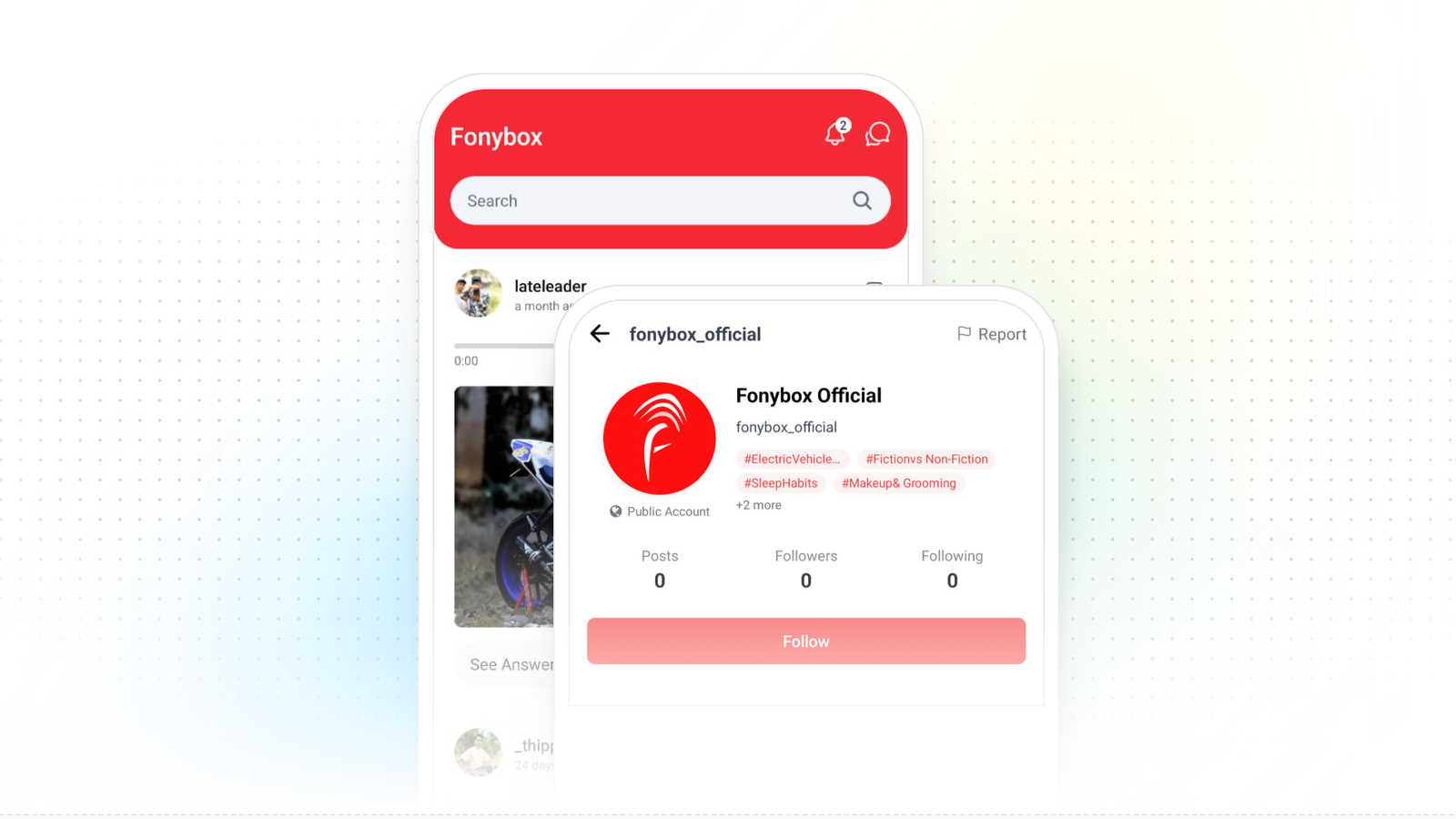
Interest-based discovery is a product decision, not a list of topics collected at sign-up. It determines which people, groups, prompts, and conversations appear after the first session. A good community app uses a few explicit signals to make the feed feel relevant, then lets people refine those signals through participation. The goal is not a mysterious recommendation engine. It is a clear reason why a person should join the next conversation.
Who This Is For
- Founders replacing a generic feed with community and interest-led discovery.
- Teams building local, hobby, professional, or shared-identity communities.
- Product managers designing first-run onboarding for a social application.
- Community operators who need public groups, private groups, and personal conversations to coexist.
Collect only the signals you can use
Ask for interests because they shape the first feed, not because every profile needs more fields. Pair interest selection with a clear explanation of what changes: which groups are suggested, which posts rise first, and whether locality affects visibility. Let users update these choices. A one-time onboarding survey becomes stale quickly when it is disconnected from the actual community.
Use locality as context, not surveillance
Locality can make a community feel immediate: nearby interests, relevant discussions, local groups, and timely questions. It becomes risky when it exposes exact whereabouts or makes people feel constantly observed. Prefer clear permission choices, coarse or contextual location where appropriate, and a product explanation of what is visible to whom. Location should improve relevance without becoming another public profile field.
Design the path from feed to conversation
A feed should point to a next action. An audio post can lead to a reply, a group conversation, an invitation, or a one-to-one follow-up. A group can be public, private, or approval-based. The user should understand which one they are joining and what their role allows. Discovery feels safer when the boundary between browse, join, speak, invite, and report is visible.
Avoid the empty-community problem
A broad social network can look empty because it assumes all users want the same global feed. Interest and local signals narrow the first experience so a new member sees fewer, more relevant choices. Seed repeatable conversation formats such as questions, short audio prompts, local updates, or topic rooms. Do not fake activity. Make it easy for the first real members to create the content that brings the next members back.
Case in Point
The published Fonybox case study combines interest selection with locality-aware feeds, then lets people turn that discovery into audio-centred posts, group chats, and one-to-one conversations. That sequence matters. Shared interests and local context shape relevance before the product asks people to speak to strangers.
Frequently Asked Questions
How many interests should a community app ask for at onboarding?
Ask for enough to make the first feed useful, then refine over time. The right number depends on the community taxonomy. A short, editable selection is usually better than a long profile form that users complete once and never revisit.
Should a local community app show exact user locations?
Usually no. Exact location is rarely required for discovery and creates avoidable safety risks. Use clear consent, coarse areas, time-limited sharing, or location only as an internal relevance signal when that meets the community need more safely.
Related Reading
How to Build an Audio-First Social App That Feels Useful
Local Voice Community Apps: Privacy, Moderation, and Group Safety