Local voice communities depend on trust. People will not join nearby groups, post audio, or start private conversations if they cannot tell how location is used, who can enter a group, or what happens after a report. Safety is therefore a product workflow: permission choices, group roles, moderation tools, user controls, and operational escalation all need to exist before a community grows.
Who This Is For
- Teams building location-aware social or community products.
- Founders adding voice posts, group voice, or private audio conversations.
- Community managers designing roles, reporting, and moderation processes.
- Mobile teams deciding how location permission and visibility work in the product.
Location should power relevance, not expose people
The product should state whether location is used to recommend a local feed, group, or conversation. It should also make clear whether anyone else can see it. Exact location, permanent tracking, and unexplained background access are rarely necessary for a community experience. Prefer coarse relevance, opt-in sharing, time limits, and settings a user can understand without reading a policy document.
Give every group a visible boundary
Public groups, private groups, approval-based groups, and one-to-one chats are different safety contexts. A member needs to know whether content is discoverable, who can invite others, who can speak, and who can remove or report a participant. Group roles should support the community model rather than exist as a hidden admin feature. Moderators need tools that match their responsibility.
Reporting must lead somewhere
A report button is not a complete safety system. Define what people can report, what evidence is captured, which roles can act, how urgent cases are escalated, and how users can block, leave, or appeal. Voice increases the need for this clarity because harmful moments can be fast and contextual. Make the exit path as easy to find as the join path.
Moderation is both product and operations
Automated detection can help surface spam or repeated abuse, but it should not be treated as the only decision-maker for a community. Human review, clear rules, consistent actions, and privacy-aware data handling remain necessary. Build the queue, permissions, and audit trail early enough that a moderator can respond without improvising a process during the first serious incident.
Case in Point
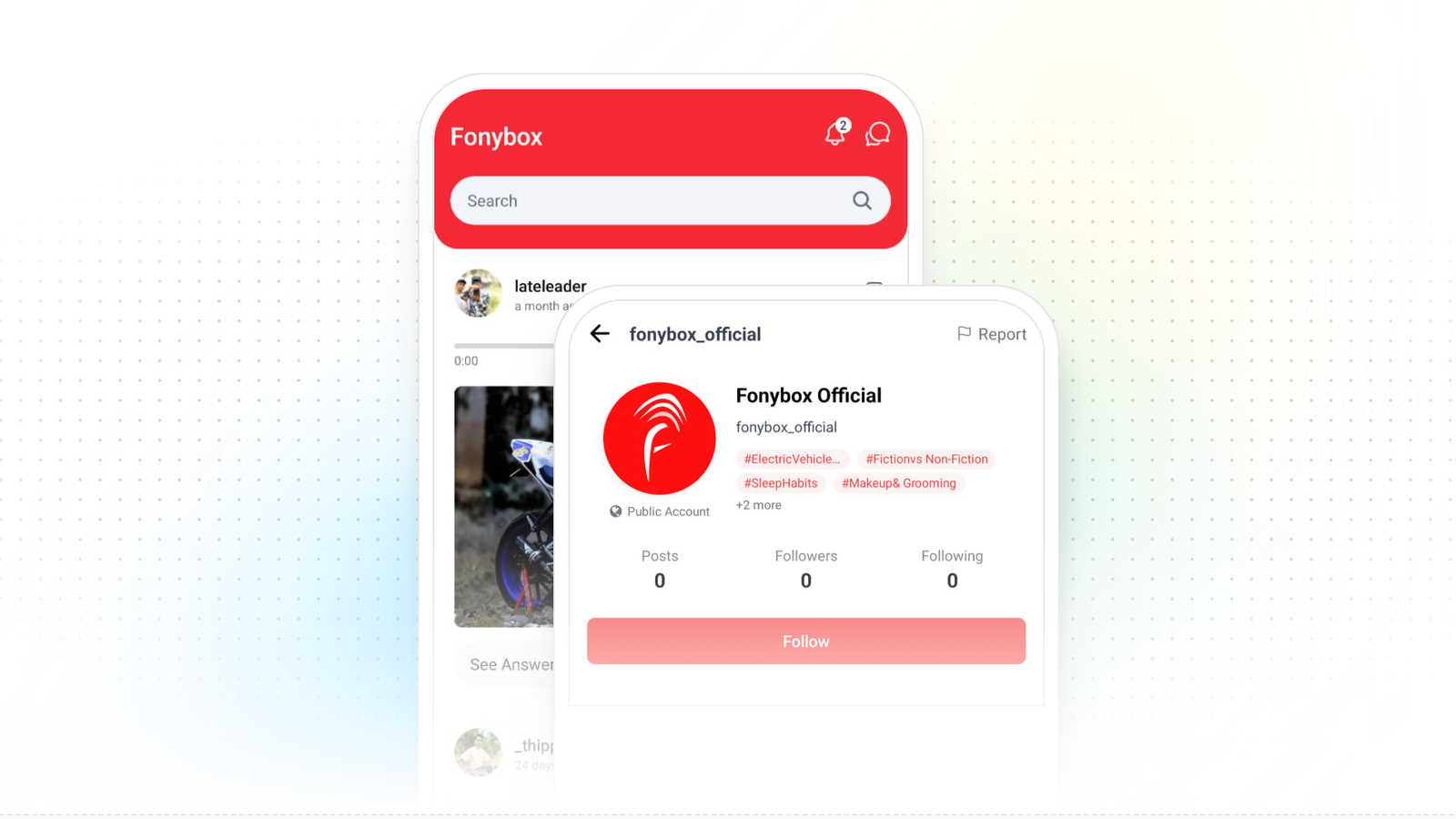
Fonybox was built around locality-aware discovery, shared interests, public and private groups, and one-to-one audio chat. That combination makes product boundaries especially important. The published case study is a useful example of why discovery, communication, and the community model should be designed together rather than added in separate releases.
Frequently Asked Questions
What safety controls does a local social app need?
At minimum, users need understandable location settings, clear group visibility, reporting, blocking, leaving, and account controls. Operators need role-based moderation, a review workflow, escalation guidance, and a way to record actions consistently. The exact model should reflect the product's audience and communication formats.
Can automated moderation handle voice-community safety alone?
No. Automation can help identify patterns and reduce queue volume, but context matters in community disputes and abuse reports. A sustainable model combines product controls, clear rules, automated assistance, human judgment, and an operational process that users can trust.
Related Reading
How to Build an Audio-First Social App That Feels Useful
Interest-Based Community App Development: Discovery Beyond the Feed