Risk advisory buyers are often senior leaders with limited time and high stakes. A website for this audience has to communicate authority quickly, explain specialist services without jargon and make the next conversation feel concrete. The design is part of the trust model, not decoration around the offer.
Who This Website Is For
- Boards and executive teams looking for independent risk perspective.
- Fintech, financial services and technology companies building risk maturity.
- Organizations preparing for regulatory readiness, audits or partner scrutiny.
- Specialist advisory firms that need qualified consultation requests rather than generic traffic.
Lead With the Business Risk
A strong home page starts with the decision the buyer is trying to make. Instead of leading with a long list of credentials, explain the risk or leadership gap the advisory firm helps resolve, who needs the help and what changes after the engagement begins.
Turn Complex Services Into Clear Paths
Fractional CRO services, third-party risk leadership, operational resilience, board workshops and regulatory readiness can feel abstract when presented as one dense paragraph. Give each service a clear role, audience, outcome and next step, then connect the paths so visitors can move from a broad need to the right conversation.
Use Proof Without Overloading the Page
Risk advisory credibility can come from relevant experience, clear methodology, specific service definitions, leadership context and useful resources. The page should make proof easy to scan and easy to connect to the buyer's situation instead of turning the experience into an undifferentiated wall of credentials.
Make the Risk Assessment a Product Entry Point
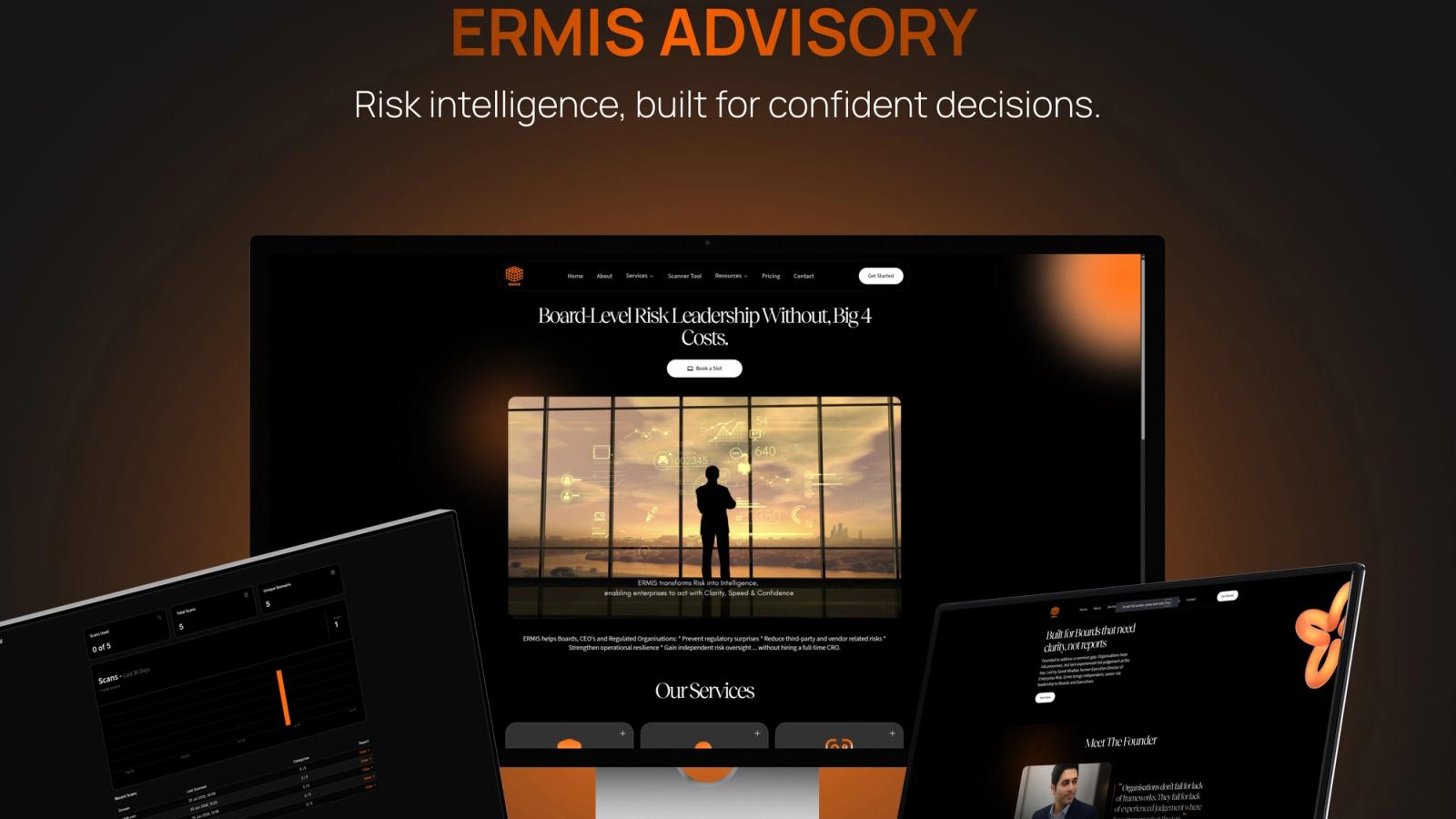
A self-serve external risk posture scan can make an abstract advisory offer tangible. It gives a visitor a useful first action, creates a reason to return and introduces the firm's method before a consultation. The experience should set expectations clearly, show what the report covers and make the handoff to expert guidance obvious.
Design the Consultation Flow
The primary call to action should be visible where intent is highest: after the positioning, service explanation, proof and assessment entry point. Keep the booking step simple, make the conversation's purpose clear and reduce the amount of repeated navigation a senior buyer has to perform.
Build the Technical Foundation for Trust
The implementation should support fast page delivery, responsive typography, accessible forms, reliable scheduling links, structured service content and a clear path for future insights. A modern SvelteKit and Tailwind build can keep the experience polished without making the content system difficult to maintain.
Case in Point
Stacknyu built a professional advisory website that presents fractional CRO services, third-party risk leadership, board advisory, regulatory readiness sprints and a 48-hour external risk posture scan in one conversion-focused flow. See the portfolio case study for the project details.
Frequently Asked Questions
What should a risk advisory website explain first?
Start with the risk or leadership problem, the audience served and the practical outcome of engaging the firm. Then make the service paths and consultation step easy to understand.
How can a consulting website build executive trust?
Use clear positioning, relevant experience, specific services, transparent methods, useful proof and a professional interaction flow. Trust grows when the website helps the buyer make sense of a complex decision.
Should a risk advisory website include a self-serve assessment?
It can be valuable when the assessment is useful on its own, explains its limits and creates a natural path to expert interpretation. The tool should support the advisory offer rather than make unsupported promises.
What technology works well for a professional advisory website?
The right stack depends on the content, integrations and team. A modern SvelteKit and Tailwind implementation can provide fast, responsive pages, while a lightweight backend and connected scheduling or assessment services support the conversion workflow.