A travel marketplace connects multiple hosts or operators with travellers, while a booking engine usually sells or reserves inventory through a defined business or supplier flow. The right choice depends on whether you need to create a supply network or make an existing catalogue easier to book.
Who This Is For
Travel founders choosing the first product model
Tour operators deciding between direct booking and host supply
Teams comparing marketplace development with a focused booking flow
Businesses planning web, mobile, payments and post-booking operations
Structured Comparison
Core model: A marketplace has hosts, packages, approval and supply-side tools. A booking engine usually starts with inventory controlled by one operator, supplier network or business.
Primary workflow: A marketplace must onboard supply and serve demand. A booking engine focuses on search, availability, pricing, checkout and confirmation.
Operational burden: A marketplace needs host permissions, moderation, package versioning, payouts, support and marketplace rules. A booking engine needs reliable inventory, booking changes, payment state and customer service.
Best first use case: Choose a marketplace when the product's value depends on variety from independent hosts. Choose a booking engine when the business already controls the inventory and needs more direct conversion.
Revenue model: A marketplace may earn commissions, fees or host subscription revenue. A booking engine may support direct margins, service fees or supplier-connected pricing.
Trust requirements: A marketplace needs host quality controls and traveller confidence across unfamiliar suppliers. A booking engine needs accurate inventory, transparent terms and reliable fulfilment.
When a Marketplace Makes Sense
Build a marketplace when the product promise is discovery across many hosts, guides, stays or experiences. The product must make it easy for supply to create packages, for admins to approve them and for travellers to compare and book them.
This model creates more workflow than a booking page. You need host onboarding, package status, versions, wallets, payouts, messaging, notifications, support and sometimes safety workflows. The complexity is justified when the network itself is the product.
When a Booking Engine Makes Sense
A booking engine is often the better first step when one operator owns the catalogue, pricing and fulfilment. It can focus the build on package discovery, availability, checkout, payment verification, invoice generation, confirmation and customer account features.
This narrower scope can make sense for a tour operator that needs better conversion or a direct sales channel but does not yet need independent hosts to publish and manage supply.
A Hybrid Path
Some products start with a controlled catalogue and add marketplace features later. The data model should leave room for hosts, package ownership, approval, versioning and payouts even if the first release only supports one operator.
The useful boundary is not marketplace versus booking engine as a permanent label. It is deciding which side of the workflow creates value first, then building the smallest reliable system around that value.
Case in Point
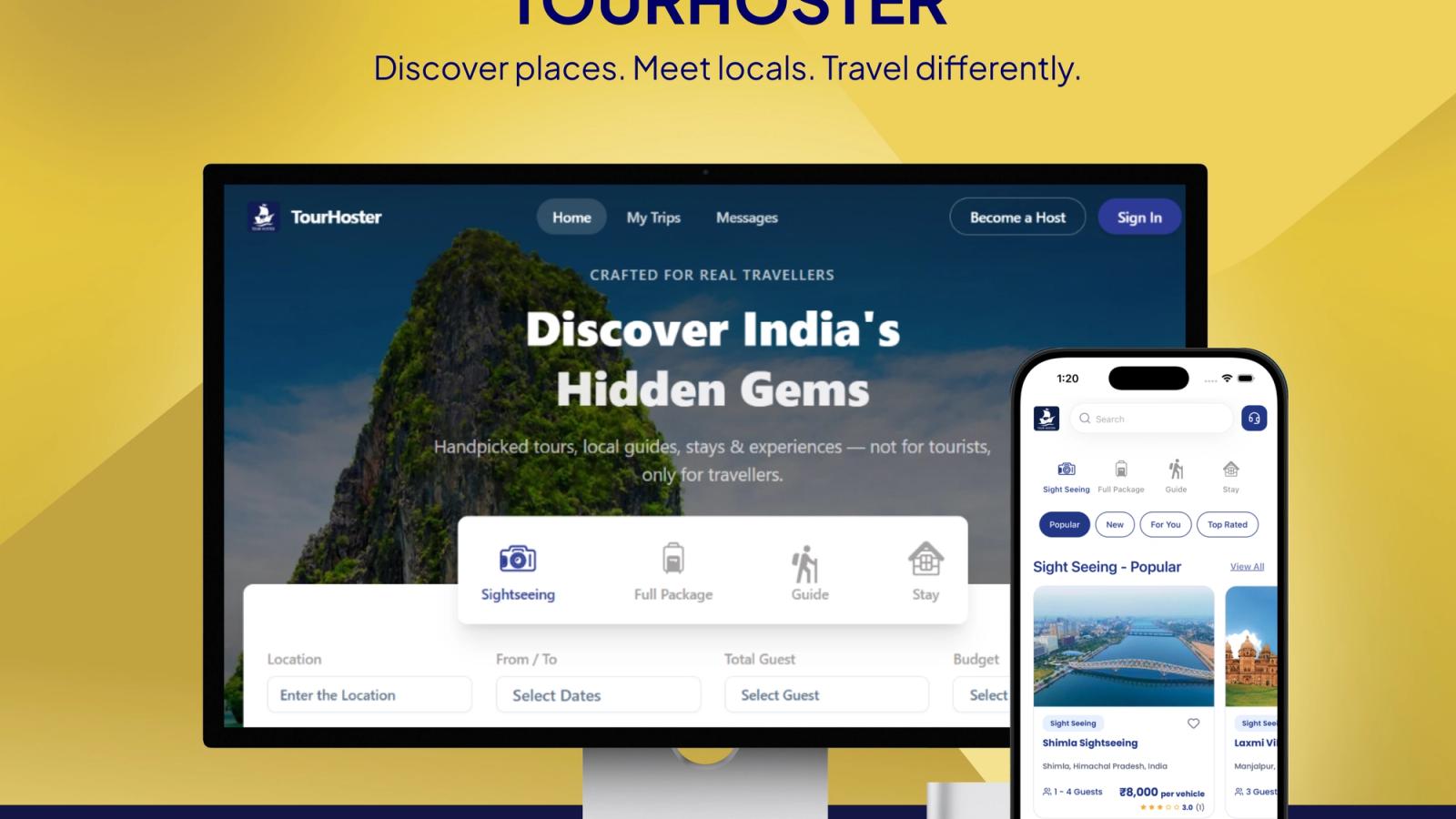
Tour Hoster is an example of the marketplace path: hosts create packages across sightseeing, full packages, stays and guides, while travellers discover and book through web, iOS and Android.
Frequently Asked Questions
What is the difference between a travel marketplace and a booking engine?
A marketplace connects independent or multiple suppliers with travellers and needs supply-side workflows. A booking engine mainly helps a business or connected supplier network present inventory, accept bookings and manage confirmation.
Should a tour operator build a marketplace or booking engine first?
Start with a booking engine when the operator owns the catalogue and needs a direct booking channel. Start with a marketplace when host supply, discovery variety and network effects are central to the product.
Can a booking engine become a marketplace later?
It can, but the data model should anticipate host ownership, package approval, versioning, permissions, payouts and support before those workflows become urgent.
What makes marketplace development more complex?
The product has to manage two or more sides of the transaction: onboarding, permissions, catalogue quality, booking state, payment collection, host earnings, payouts, communication and dispute or support paths.