A security-equipment website has at least four jobs: explain products, help a buyer judge fit, support technical evaluation, and create the right next step. Those jobs look different for a homeowner, a facilities manager, an installer, and a distributor. The site should therefore offer distinct paths while keeping one source of truth for product information, sector content, partner details, and enquiries.
Who This Is For
- Security manufacturers, distributors, and installers serving more than one buyer type.
- B2B teams that need technical specifications, documentation, distributor information, and project enquiries.
- B2C buyers who need plain-language explanation before they can choose a product or request a survey.
- Content teams maintaining product information, buyer guides, sector pages, and ongoing blog material.
Do not split the site into B2B and B2C silos
Creating two entirely separate websites can duplicate product records, documents, FAQs, and maintenance work. Treat B2B and B2C as different journeys through the same content system instead. The homepage and navigation can let visitors self-select by their goal: find a solution for a property, explore products, request a business proposal, become a partner, or access technical resources.
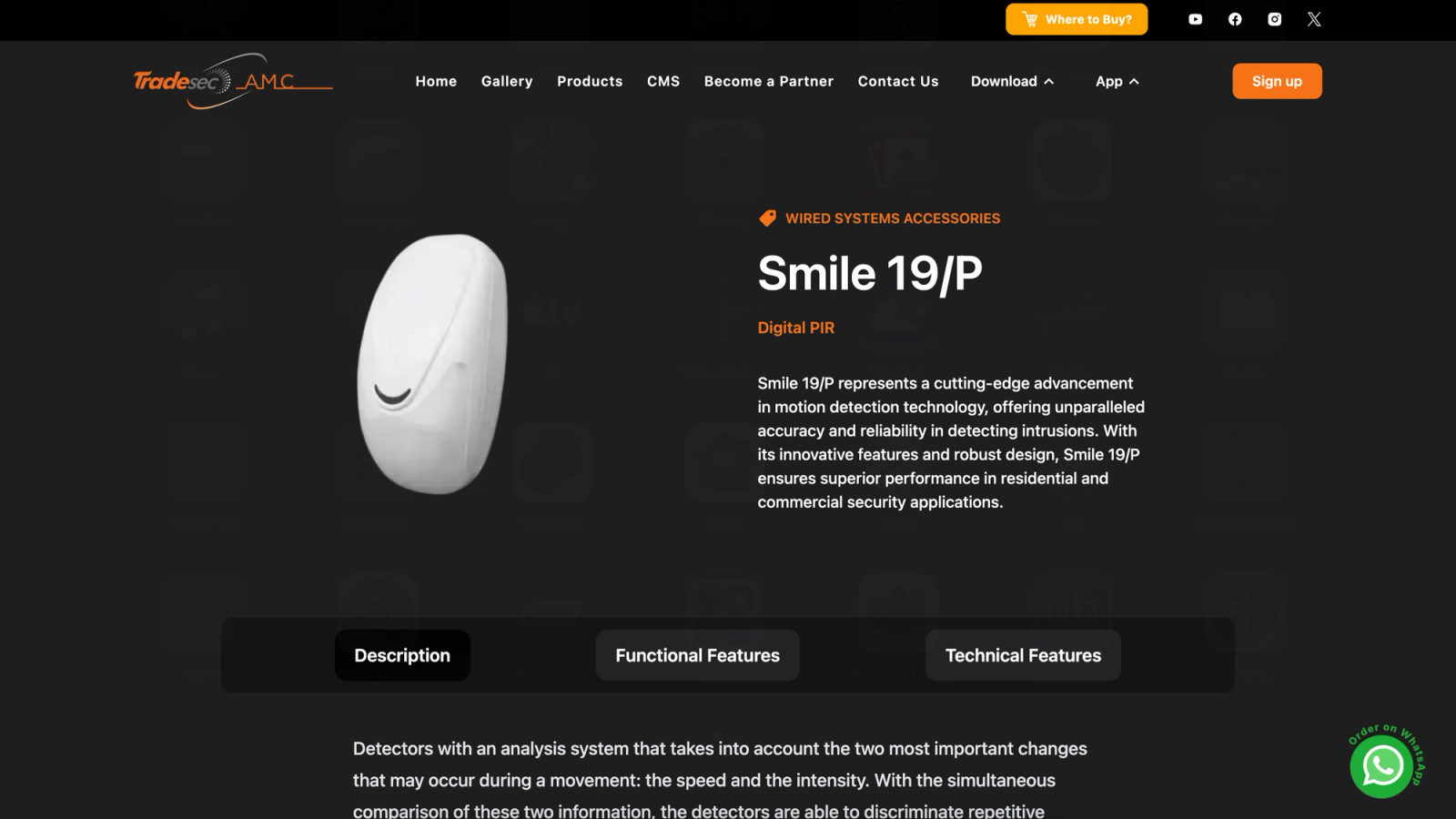
The shared content model matters. A product record can have a short buyer explanation, technical specification, compatible accessories, sector applications, downloadable documentation, and a tailored CTA. The homepage may surface a simple version; an installer resource can surface the technical one. The facts remain consistent because the site is not maintaining two product catalogues by hand.
Give each buyer a clear first question
The B2C question: What protects my property?
A consumer may not know the difference between a motion detector, communicator, and control panel. They need plain language, property examples, basic system explanations, trust signals, and a clear route to an enquiry or survey. Product pages should clarify what the component does without pretending that every property can be configured from a browser alone.
The B2B question: What will work in this environment?
A commercial buyer may need compatibility, deployment conditions, documentation, support, project scope, and a sales contact who understands the building. A site should make it easy to reach sector-specific pages for offices, retail, warehouses, and industrial premises. It should also explain whether the next step is a technical consultation, a distributor request, a proposal, or a site survey.
The partner question: How do I sell, specify, or support this?
Partners and distributors need different material again: product portfolio context, technical downloads, support channels, registration or enquiry requirements, and clear ownership of the next conversation. A partner page should not be hidden inside a generic contact form because it represents a different relationship and often a different follow-up process.
Use a six-area information architecture
A practical structure for a security-equipment company has six areas: company and credibility, product discovery, sector-specific solutions, learning content, partner or distributor information, and contact or enquiry paths. This does not require six isolated departments. It requires one navigation system that gives each visitor enough certainty to keep moving.
The product area should link outward to sector pages and relevant guides. Sector pages should link back to products and an enquiry. Blog articles should answer the questions that appear before a visitor knows a model or even a product family. Partner pages should lead to a channel-specific conversation. The repeated links are not clutter when they shorten the decision path.
Choose the right conversion action
Not every product needs a Buy Now button. A simple accessory with stable specifications may work with ecommerce. A configured intrusion system often needs a quote, compatibility check, project discussion, or survey. The site can still use a small set of consistent actions: request a quote, discuss a project, download a document, find a distributor, or enquire about partnership. Each action should reflect the commitment and information needed at that point.
This is an important concession. Ecommerce can reduce friction for simple, standardised products and should not be dismissed because a business sells technical equipment. It becomes a poor fit when checkout hides site conditions, installation complexity, or the need for a designed response workflow. Use commerce where the buyer can reasonably self-serve; use an enquiry where professional judgement is part of the product.
Make technical trust visible without overwhelming visitors
Security buyers look for different kinds of reassurance. Consumers may look for comprehensible guidance and service access. Commercial buyers may seek system information, compatible products, technical resources, support ownership, and proof that the company understands the property type. Show the appropriate material at the right depth. Avoid both extremes: vague marketing claims and unstructured PDF dumps.
A CMS-led site helps here because product copy, guides, applications, and partner information can be updated without rebuilding the page structure. That is valuable when a catalogue grows, a document changes, or new sector content is required after the initial launch.
Case in Point
Stacknyu's published security-systems website case study describes a SvelteKit and Sanity CMS build with Cloudflare Pages and Firebase. Its public structure combines product pages, sector-specific solutions, a blog, partner and distributor information, and contact or enquiry forms. The important pattern is not the technology list by itself; it is the decision to support B2B and B2C engagement through one managed website.
Frequently Asked Questions
Should a security equipment website have ecommerce?
Use ecommerce for products that have stable specifications and can be selected without a site-specific design conversation. Use a quote or technical enquiry for configured alarm systems, installations, projects, and products where compatibility or response planning changes the recommendation.
How can one security website serve B2B and B2C buyers?
Keep one product and content system, then give visitors separate entry paths and calls to action. Consumers can start with property problems and plain-language guidance. Business buyers can reach technical resources, sector pages, proposals, and project enquiries. Partners can use a dedicated channel route.
What pages should a security systems website include?
Most businesses need company and trust content, product or solution discovery, sector-specific application pages, educational content, partner or distributor information, and clear contact or enquiry paths. The exact menu should follow the buying journey, not a generic website template.