Travel marketplace platform development connects travellers, hosts, packages, bookings, payments and support in one product. The hard part is not listing tours. It is making both sides of the marketplace trustworthy, searchable, payable and operationally manageable as the catalogue grows.
Who This Is For
Travel marketplace founders validating a multi-sided product
Tour and activity businesses bringing independent hosts onto one platform
Teams that need web and mobile discovery, booking, messaging and payouts
Businesses replacing disconnected forms, payment tools and host spreadsheets
What a Travel Marketplace Platform Must Own
A marketplace needs a clear relationship between the traveller, the host, the package and the booking. A host should be able to create and update an offer. A traveller should be able to search, compare, book and manage the trip. The platform needs to preserve that relationship when a package changes, a payment is retried, a message arrives or a support issue is raised.
The first design question is catalogue structure. Travel products may include sightseeing tours, full packages, stays, guides or experiences. Each category can share a discovery flow while still requiring different fields, availability rules, pricing details and fulfilment steps.
Host Workflows and Quality Control
The supply side needs more than a sign-up form. A useful host journey includes onboarding, package creation, itinerary details, media, pricing, availability, admin approval, edits and versioning. Approval protects the traveller experience, while versioning prevents a live package from changing unpredictably after a booking.
AI can reduce the effort of drafting an itinerary from a description or uploaded document, but generated content should still pass through human review. The product should make approval visible instead of treating AI output as automatically publishable inventory.
Traveller Discovery and Booking
Travellers need filters that match how trips are actually chosen: location, dates, guests, budget and category. Search results should lead to a package page with enough information to support a decision, then move into a booking flow that explains payment status, confirmation, invoice and next steps.
The account area matters after checkout. My Trips, messages, notifications and emergency contacts turn a marketplace from a catalogue into a service that supports the traveller before and during the experience.
Payments, Payouts and Trust
Marketplace payments need server-side controls. The platform should verify webhook signatures, validate the amount on the server, record the booking payment and generate an invoice. The host side then needs a wallet or earnings view, payout requests and a clear record of what has been earned and paid.
Trust also comes from operational details: admin approval, package status, secure authentication, clear cancellation or support paths, in-app communication and SOS contact access. These are product workflows, not decorative features.
Technical Shape
A shared backend can keep package, booking, payment, wallet and message rules consistent across web and mobile. The frontend can then adapt the experience to each surface without creating separate versions of the business logic.
For a growing marketplace, useful building blocks include structured package models, role-aware dashboards, server-side payment validation, notifications, deep links, search filters, image handling and audit-friendly status transitions.
Case in Point
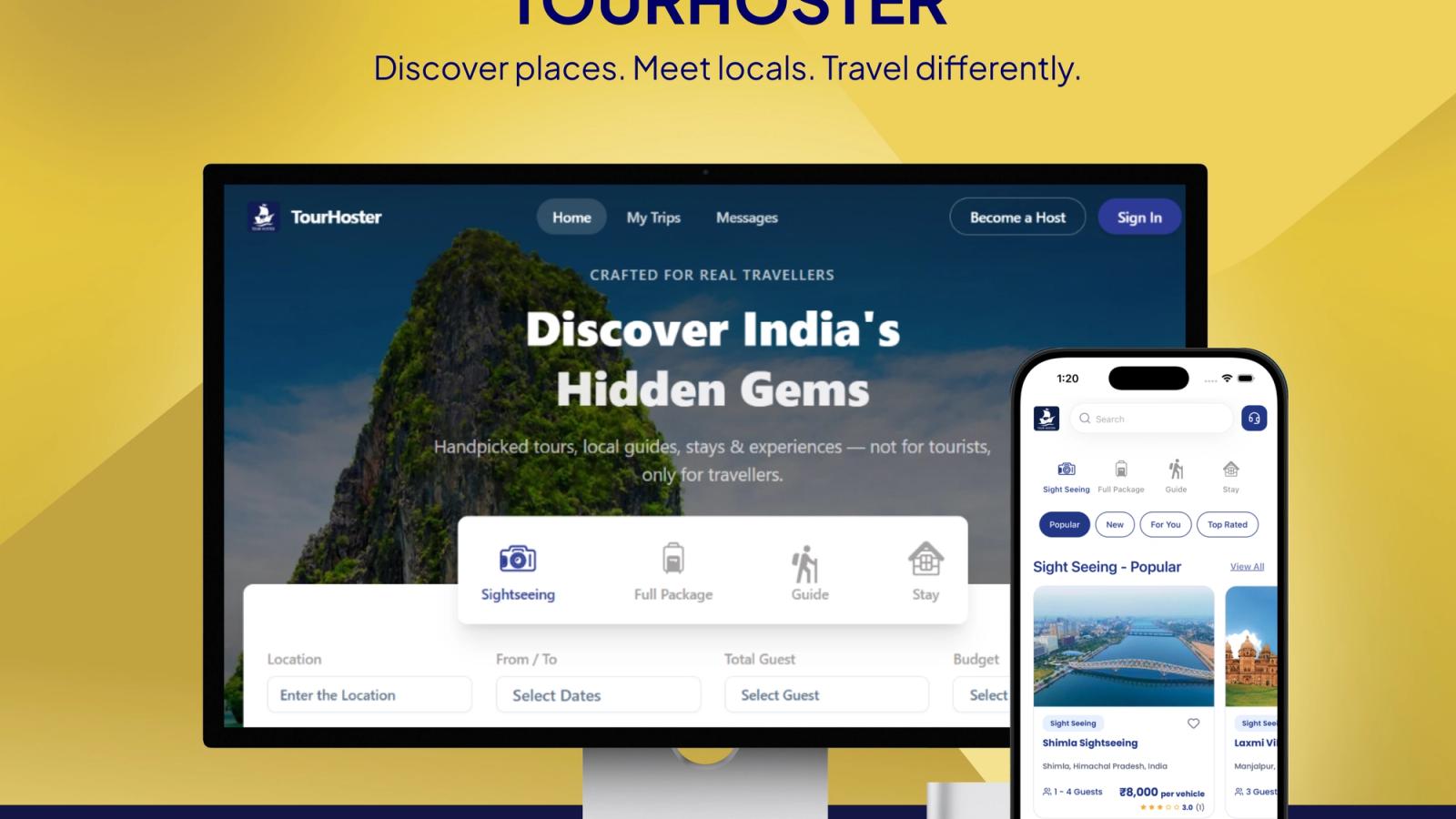
Stacknyu built Tour Hoster as a travel marketplace across web, iOS and Android, with host package creation, admin approval, four package categories, Razorpay checkout, wallet payouts, messaging, push notifications and SOS support.
Frequently Asked Questions
What is a travel marketplace platform?
It is a multi-sided product where travellers discover and book travel products supplied by hosts or operators. The platform owns discovery, package information, booking, payment, communication, support and the operating rules between both sides.
How do travel marketplaces make host listings trustworthy?
Common controls include host onboarding, admin approval, structured package fields, package versioning, clear availability and payment records, plus support and messaging workflows after a booking.
Should a travel marketplace launch on web and mobile?
It depends on the audience and usage pattern. Web is useful for search, sharing and acquisition, while mobile apps can support trips, messages, push notifications and on-the-go actions. A shared backend keeps the core rules consistent.
How should travel marketplace payments be designed?
Validate payment events on the server, verify signed webhooks, confirm the amount against the booking, issue invoices and keep host earnings separate from traveller payment state. Payout requests should have their own status and audit trail.