An ATS and a job board solve different problems. An ATS helps an employer manage requisitions, candidates, interviews and hiring decisions. A job board helps publish opportunities and attract applicants. A platform like JobPostmen sits beside those models: the primary workflow is a candidate uploading a CV, buying credits and distributing it to selected employers or recruiters. Choose the product around the action that creates value.
Who This Is For
- Recruitment founders deciding between a job board, ATS or candidate service.
- Staffing businesses that need a workflow beyond listing vacancies.
- Career platforms choosing between subscriptions, credits and employer-paid listings.
- Teams that need to own a distinctive candidate or recruiter workflow.
What an ATS Owns
An ATS is employer-side operating software. Its centre is the requisition and candidate pipeline: job creation, applications, screening, interview stages, hiring decisions, notes, communication and reporting. It may integrate with job boards, but its main user is the hiring team managing an open role.
What a Job Board Owns
A job board is a discovery and publishing product. It needs listings, search, filters, employer or recruiter posting, candidate applications, notifications and SEO-friendly pages. It can be enough for a niche community, association or publisher that already has an audience and wants a focused vacancy destination.
Where a Candidate Distribution Platform Differs
A candidate distribution product starts with a document and a recipient set rather than a vacancy. Its hard problems are credit accounting, recipient selection, email delivery, privacy, payment confirmation and a clear history of what was sent. Adding an ATS pipeline would not automatically solve those problems. It could add complexity without improving the primary service.
Choose the Build Around the Primary Workflow
- Choose an ATS when employers need to move candidates through an internal hiring process.
- Choose a job board when publishing and discovering vacancies is the product.
- Choose a candidate distribution platform when paid access to a recruiter network is the service.
- Combine them only when the business genuinely needs both external discovery and internal hiring operations.
What the Custom Layer Usually Adds
Custom development is useful when the product needs a distinct credit model, special recipient rules, a controlled email workflow, a private data boundary, or an admin panel that reflects the operator’s real work. It also gives the team control over the sequence from payment to delivery instead of forcing the service into an employer-first template.
When Buying Is the Better Decision
Buy an ATS when your process already fits a mature hiring pipeline. Buy a job-board platform when speed, listings and standard monetization matter more than workflow ownership. A custom build has a higher responsibility for product decisions, operations and maintenance, so it should be reserved for a real differentiation rather than a preference for a different interface.
Case in Point
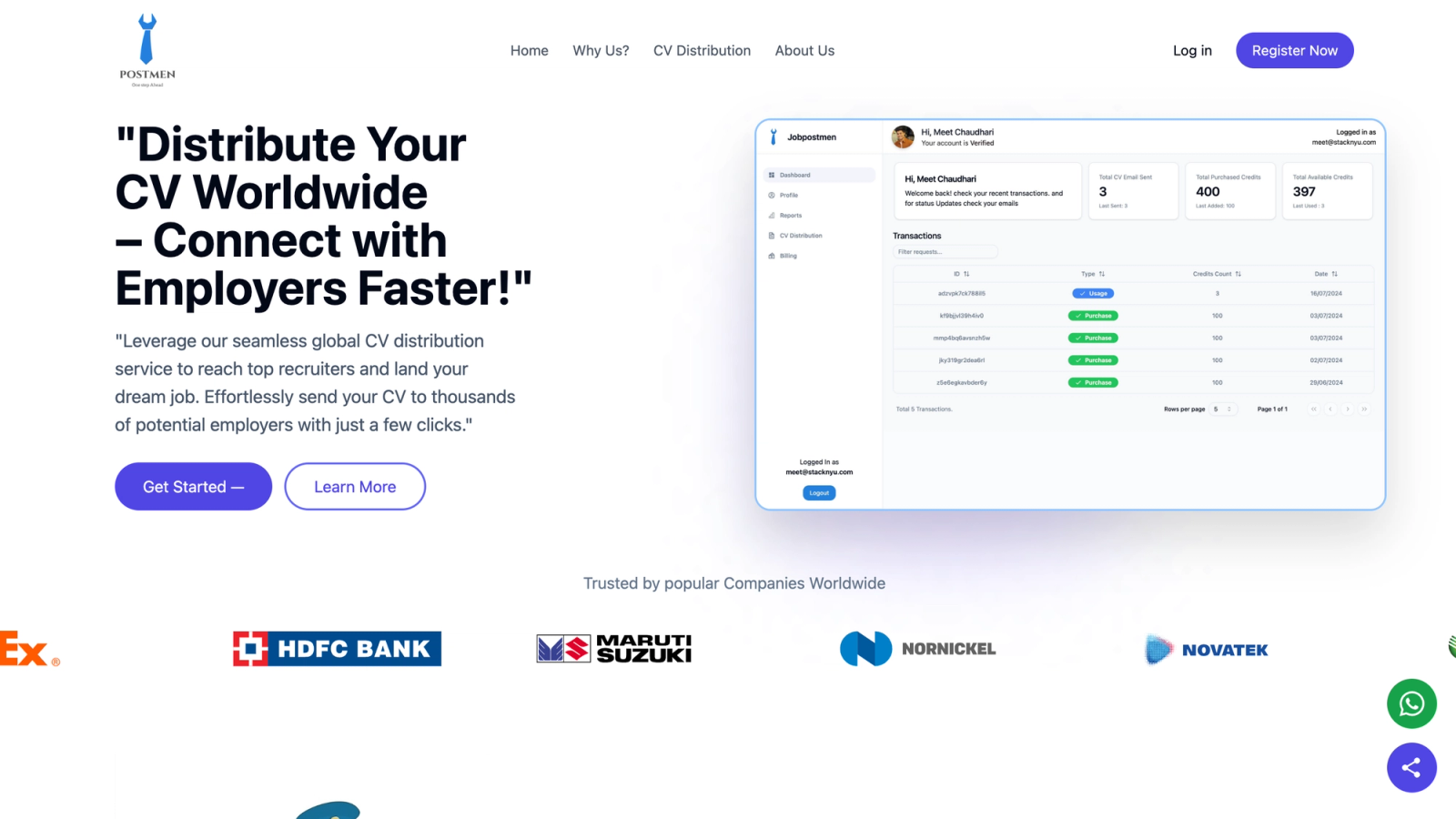
JobPostmen was not framed as a conventional ATS. Its core product was a credit-based service for uploading CVs and distributing them to selected employers, with user tracking and an admin panel. Read the JobPostmen case study for the implementation context.
Frequently Asked Questions
What is the difference between an ATS and a job board?
An ATS manages an employer’s internal recruitment pipeline. A job board publishes jobs and helps candidates discover or apply to them. The user, data model and primary workflow are different, even when the products integrate.
Should I build an ATS or a job board first?
Start with the workflow that creates revenue or user value. Build an ATS for employer-side hiring operations, a job board for vacancy discovery, or a candidate distribution service when the paid action is sending a CV to a recruiter network.
Can a job board include ATS features?
Yes, but each added workflow increases the data, permissions, testing and support surface. Add ATS features when employers need them, not because every recruitment product is expected to contain every module.
When is custom recruitment software worth building?
It is worth considering when the business has a workflow that standard ATS or job-board products cannot represent cleanly, such as a credit-backed CV service, special distribution rules, a private recruiter network or an operator process that needs its own dashboard.