Building a music distribution platform means designing the complete release journey, from an artist's first upload to delivery, store responses, earnings visibility and account support. The strongest products make complicated operational work understandable without taking ownership away from the artist.
Start With the Release Lifecycle
Map the states a release can move through before designing the screens: draft, validation, review, scheduled, submitted, accepted, live, rejected and withdrawn. Each state needs an owner, a next action and a useful explanation when something needs correction. This turns a status label into a workflow the artist or label can actually operate.
Build the Artist Workspace
- Upload audio, artwork and release metadata in one guided flow.
- Show validation issues before a release reaches a store partner.
- Support scheduled releases and make timing visible across the catalog.
- Give artists a clear view of ownership, delivery status and earnings.
Design Metadata Before the UI
A distribution platform lives on structured catalog data. Model releases, tracks, contributors, artwork, territories, identifiers, dates and rights relationships before polishing the dashboard. This makes it possible to validate required fields, preserve corrections and transform one release into the formats required by connected stores.
Create a Delivery and Validation Layer
The delivery layer should separate internal release data from partner-specific payloads. It can validate metadata, prepare the submission, capture responses, retry transient failures and keep a human-readable history. When a destination rejects a release, the platform should connect the response to the exact field or asset that needs attention.
Support Artists, Labels and Teams
A solo artist and a label do not need the same workspace. Add role-based access so an owner can manage billing and permissions, a label operator can review and schedule releases, and a contributor can see the work relevant to them. Team and label management becomes much easier when the permission model is explicit instead of inferred from a single account type.
Connect Rights and Royalty Operations
Artists need confidence that their ownership and earnings information is represented correctly. The platform should record rights relationships, collaborator shares, collection services, statements and payment setup as first-class data. Even when a partner handles part of the collection process, the artist-facing product should explain what is happening and where the current release stands.
Choose an Architecture That Can Be Observed
The front end, account service, scheduling logic, payments, catalog store and partner integrations should have clear responsibilities. That separation makes it easier to trace a release, isolate a failed integration and evolve the dashboard without rewriting the delivery engine. Observability is a product feature here because support teams need to answer questions about a release quickly.
Case in Point
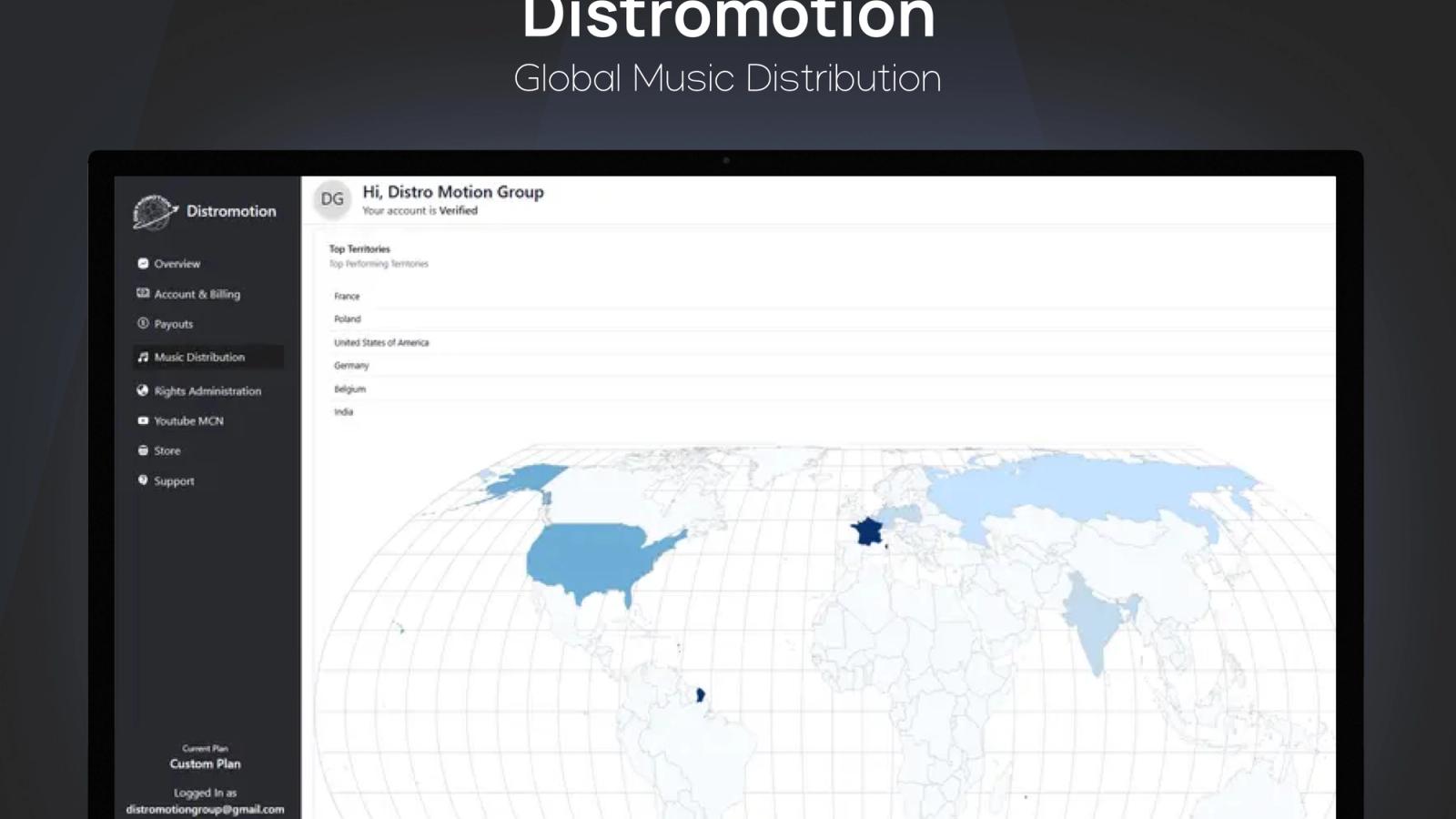
Distromotion was built as a global music distribution platform for artists and labels. Its product combines uploads, a release dashboard, team permissions, scheduled releases, payment setup, rights administration and YouTube MCN services, with distribution to 300+ stores across 195+ countries. See the Distromotion case study for the implementation context.
Frequently Asked Questions
What is the first feature to build in a music distribution platform?
Build a reliable release intake and validation flow first. It establishes the catalog data model and gives every later feature a clear foundation: delivery, scheduling, permissions, reporting and support.
How do artists distribute music to multiple stores?
The platform collects structured release data, validates it, transforms it into partner-ready submissions and tracks each destination's response. The artist should see one understandable release workflow even when the underlying delivery paths differ.
Why do label platforms need different permissions?
Labels often have owners, managers, release operators and contributors working across multiple artists. Role-based access protects payment and account settings while still allowing the right people to prepare, review and monitor releases.
Should every music business build its own distribution platform?
No. Use an established distributor when basic delivery is the requirement. A custom platform makes sense when the business needs its own ownership model, team workflow, rights operations, partner strategy or branded artist experience.